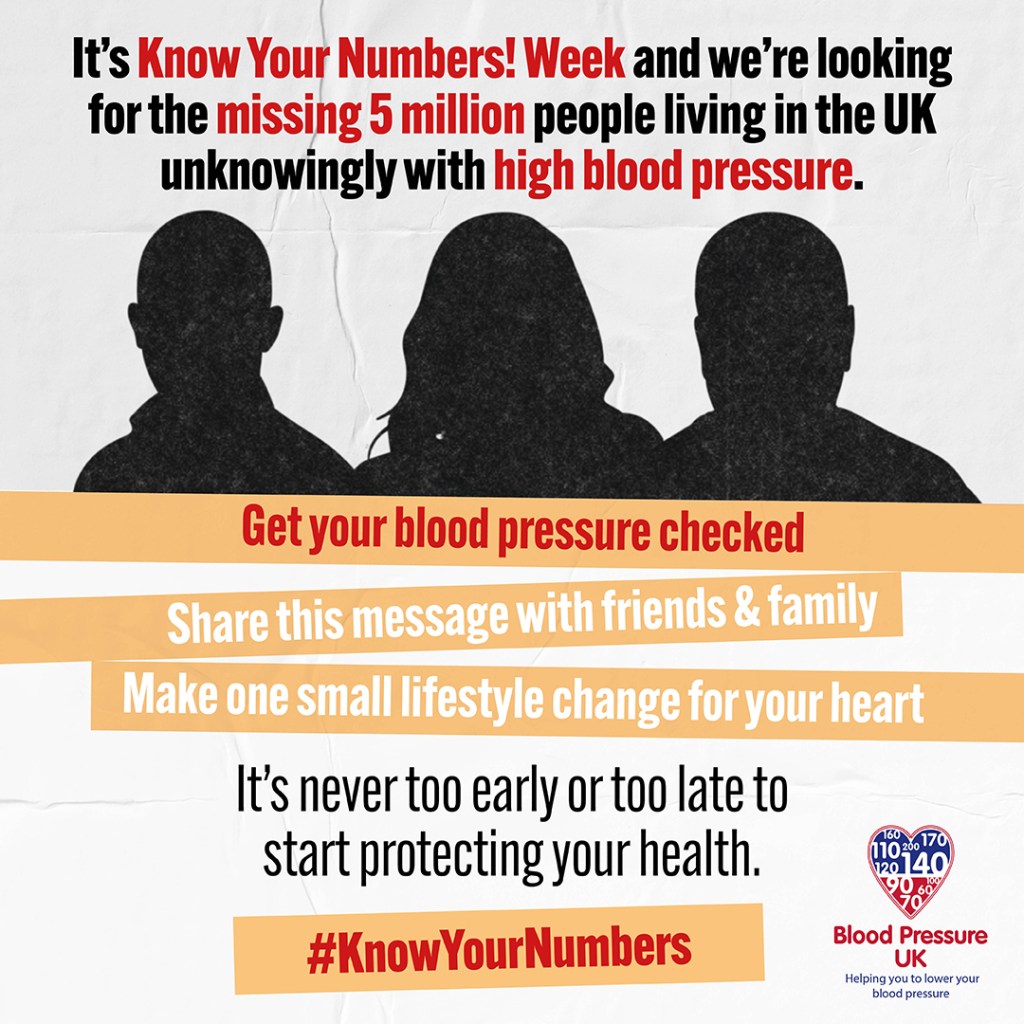
No, this is not a call to pick up your maths notes from high school (I’m sure most people set theirs on fire). This is a call to have your blood pressure checked, a campaign started by Blood Pressure UK.
They estimate around 5 million adults in the UK could be living with high blood pressure without knowing it. There are no symptoms, but living with high blood pressure for years without action greatly increases the risk of stroke, heart attack and kidney disease.
1. Why should I care about blood pressure?
Blood pressure is essential for cycling blood through your body, picking up vital ingredients like oxygen and nutrients and delivering them to each body part. Blood that goes all the way to your toes has to fight gravity to make its way back up to your lungs where it collects more oxygen. This flow occurs due to the force of blood pressure. The ideal blood pressure is between 90/60 mmHg and 120/80 mmHg.
Your blood pressure naturally increases in response to eating sodium salts. If you have eaten salty food, the salt will enter your bloodstream but your body is always trying to keep the ratio of salt to water in blood the same. So the more salt there is in the blood, more water is needed to maintain the ratio. This leads to a greater volume of blood and hence a higher blood pressure. Other factors which contribute to higher blood pressure include a high weight, low potassium intake and an inactive lifestyle.
Over time, high blood pressure can damage your blood transport system (the arteries). Usually your artery linings are smooth, but prolonged pressure can weaken the arteries and damage to the walls. There are no symptoms associated with high blood pressure, but it can cause health problems later on in life.
If left untreated, it can increase the risk of stroke, heart attacks and kidney disease.
2. How can I check my blood pressure?
You don’t need to go to your doctor’s surgery to get a blood pressure check. There are many other places which could offer blood pressure monitoring including your local pharmacy and some gyms and health clubs. For a full list, see the Blood Pressure UK website.
A home blood pressure monitor can also be used to check your blood pressure. It’s worth asking around your friends and family to see if someone has one that you could borrow.
3. I know my numbers, what’s next?
A one off high blood pressure reading does not mean you have high blood pressure. Blood pressure fluctuates throughout the day and each day depending on a number of factors, including food consumed and activity levels. Try taking your readings first thing in the morning. If the numbers stay consistently high, contact your doctor.
Your doctor won’t put you on blood pressure medication straight away. They will ask you to fill in a chart of your blood pressure numbers each morning and evening for a week to check the fluctuations. You will then discuss the results with your GP and make a plan from there.
For ways to help lower your blood pressure, visit the Blood Pressure UK website.
References
The UK’s leading patient-focused charity dedicated to lowering the nations blood pressure to prevent stroke, heart and kidney disease, Blood Pressure UK – Helping you to lower your blood pressure. Available at: https://www.bloodpressureuk.org/ (Accessed: 07 September 2025).
Bakris, G.L., Sorrentino, M.J. and Laffin, L.J. (2024) Hypertension: A companion to braunwald’s heart disease. Philadelphia, PA: Elsevier.
 Nicola Wade
Leave a comment