
When experts are asked about the biggest challenges facing humanity, one that is usually brought up is Antimicrobial Resistance or AMR. But what exactly is antimicrobial resistance, and why are so many people worried about it?
Let’s break down the topic.
What are microbes?
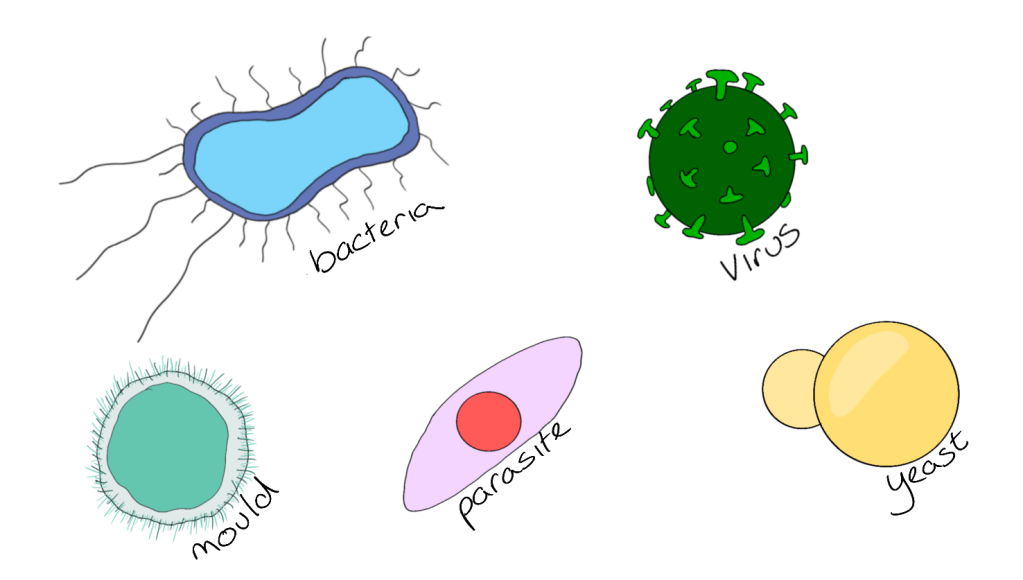
Microbes are teeny tiny living things that we can’t see with the naked eye. They are smaller than a grain of sand, or even a piece of dust. They live alongside us and in our bodies.
Bacteria – we are covered in bacteria, on our skin, in our gut microbiome
Yeast – this microbe helps our bread to rise and adds the alcohol to beer
Mould – appears when a piece of food has went bad or moisture is trapped in the walls
Virus – causes the common cold, but some viruses are good to us and can infect and kill bacteria
Parasites – not all parasites are classed as microbial, for example, a tape worm is too big. The parasite that causes malaria is microbial because of it’s tiny size
All of these microbes look very distinct from each other and use different ‘machinery’ to keep themselves alive.
What are antimicrobials?
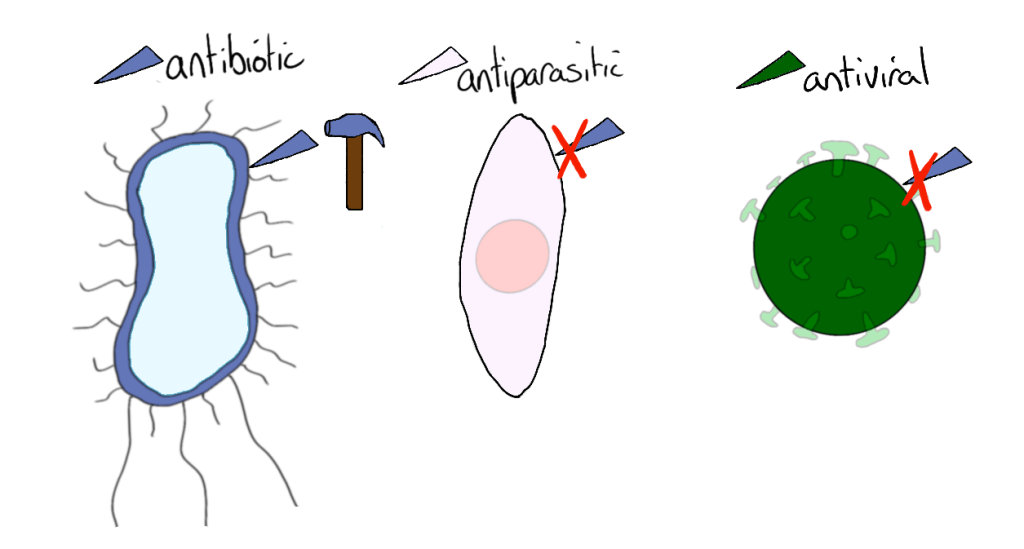
While we live happily alongside many microbes, some of them can make us sick. The flu is caused by a virus. Strep throat is caused by a type of bacteria. Malaria is caused by a tiny parasite. They are all caused by different microbes, and so we need to treat them with the correct antimicrobial.
Microbes are a bit like factories, they have a lot of machines that need to be working to keep the factory running. If one machine breaks, it can cause total chaos and the shut down of the factory.
Antimicrobials work by breaking a piece of the machinery keeping the microbe alive. Each microbe has different machinery as they make completely different products.
The outer layer of bacteria is a machine which controls the entry and exit of food and air and shields against anything toxic. Some antibiotics cause a hole in the machine causing it to break and kill the bacteria. Parasites and viruses don’t have the same type of machine, and so the antibiotic can’t do anything to harm them.
When you visit a doctor, they will be able to identify the type of microbe causing your illness and give you the correct treatment.
They will specify how to take this medicine, and it is very important that you stick to this, as taking it wrong can lead to antimicrobial resistance.
What is antimicrobial resistance?
Microbes are living things, and will do everything in their power to survive.
When microbes reproduce, their DNA can change slightly, leading to small differences in the machinery of the microbe. Sometimes these differences don’t matter, think people with long fingers being better at playing piano. A microbe may need slightly less food or transport nutrients differently.
But other times a microbe might have a tiny difference which stops an antimicrobial from being able to kill it quickly. And so the microbe can survive the initial antimicrobial treatment.
This is more likely to occur if the antimicrobial treatment wasn’t taken correctly, not all of the microbes are killed which allows them to reproduce. Now all the new bacteria have the change which helps them survive.
If you use the same antimicrobial to try and treat them, it will barely kill any of them and they are now called resistant to this antimicrobial

Summary
Antimicrobial resistance is when a microbial infection can no longer be killed by an antimicrobial. Luckily, we have many different types of each antimicrobials which target different machines. But there are now microbes, known as superbugs, which cannot be killed by many antimicrobials. Research is needed to develop new antimicrobials which can attack the machines in the microbe differently, which we can then use to kill these superbugs.
Thank you for taking the time to read my blog post! Check out the posts below or head back to the blog feed by clicking here.
 Nicola Wade
Leave a comment