
How does your body make vitamin D?
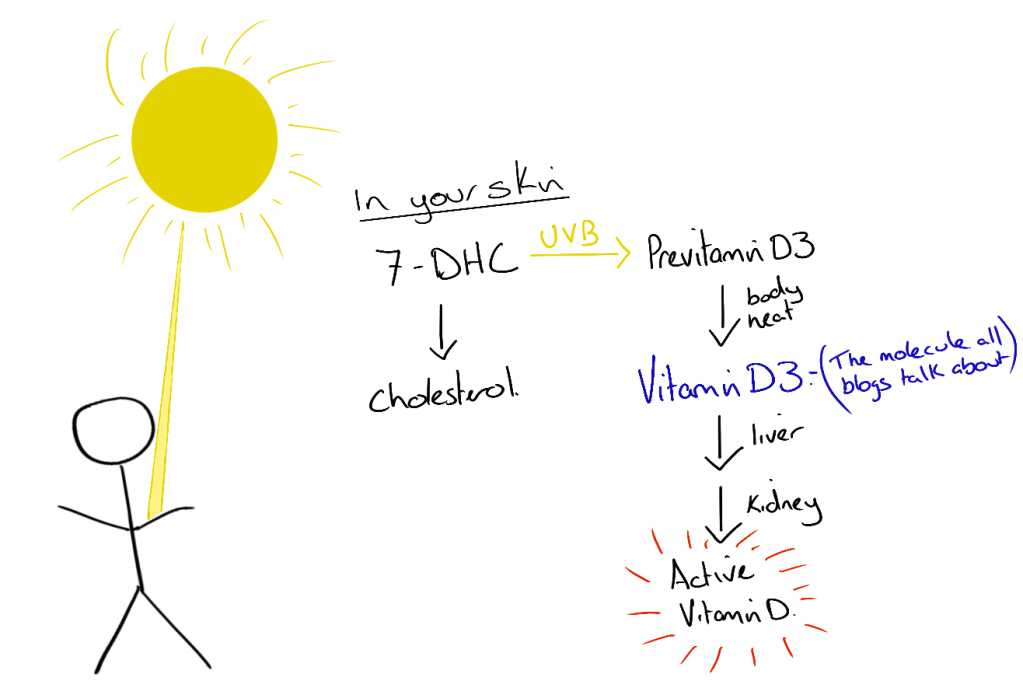
We start with a molecule called 7-dehydrocholesterol (7-DHC). This is made in your skin on the pathway to cholesterol. When your body needs vitamin D, it uses 7-DHC and on the vitamin D pathway.
Energy from the sun reaches us as ultraviolet (UV) radiation, mostly UVA or UVB. The UVB waves are taken in by our skin and used to break a part of 7-DHC. This then becomes Previtamin D3. The energy from body heat slowly rearranges previtamin D3 to the favoured structure of vitamin D3.
Vitamin D3 is then transported to the liver then the kidneys where it is modified to the active compound.
Vitamin D from food
Vitamin D can also be found in some of the food that we eat. Vitamin D from animal sources like oily fish and eggs is the D3 variant, the same that we make in our skin. If we get vitamin D from plants, like mushrooms, it is has a slightly different structure and is called vitamin D2. They look very similar with only a few small changes. They can both be used by the body to produce the active vitamin D.
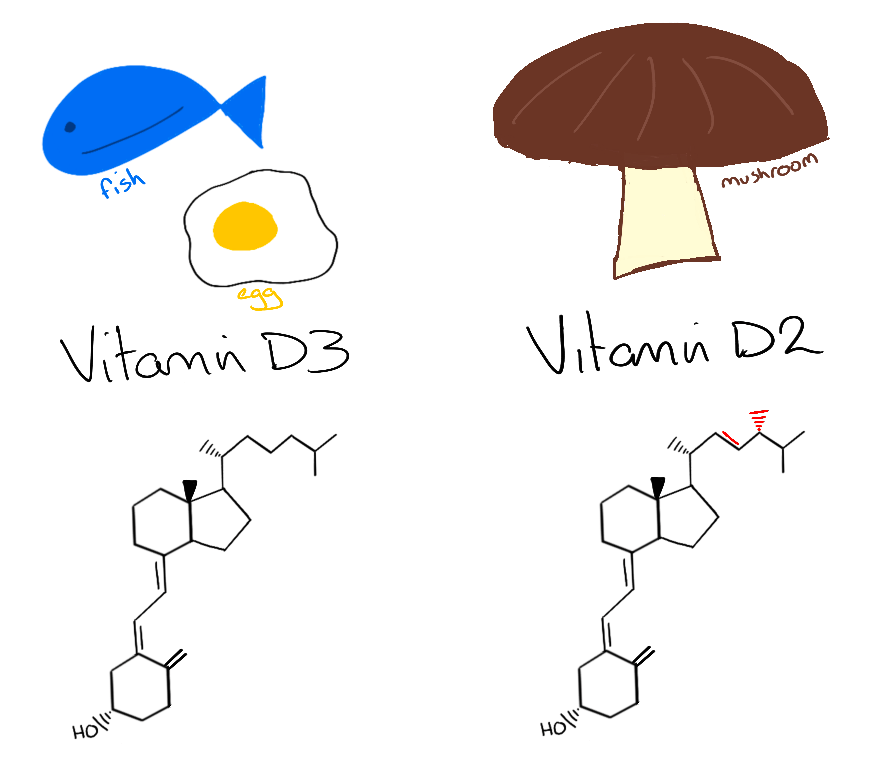
If food has vitamin D added to it (you might see this on a label as fortified), like in some cereals, it could be either the D2 or D3 variant. Check the nutritional label to find out which one has been added.
What does vitamin D do?
Active vitamin D has a lot of uses in the body. Consequently, a lack of vitamin D in the body has been tied to many different diseases.
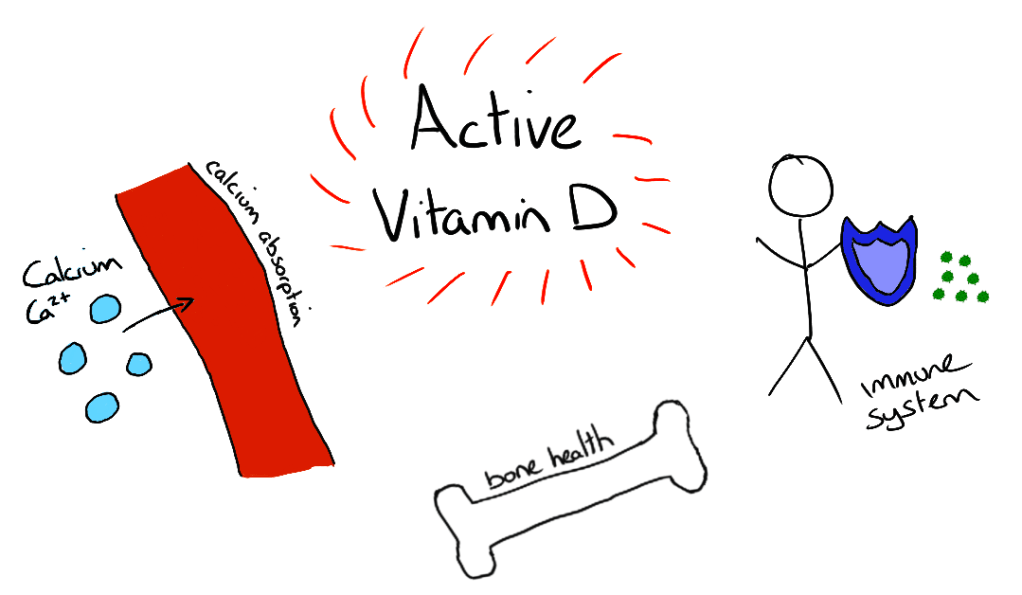
Active vitamin D can travel to the intestine where your body is breaking down and absorbing food. It signals the body to take in more calcium into your blood stream.
It has also a role in bone health, although experts are still debating what is actually happening. We can say for sure that calcium and phosphate is needed for strong healthy bones, and so vitamin D makes sure there is plenty of these minerals around.
Vitamin D also plays a big role with the immune system. Having enough active vitamin D can help you fight infections. It also helps to regulate the part of the immune system responsible for autoimmune diseases, such as rheumatoid arthritis or inflammatory bowel disease.
Thank you for taking the time to read my blog post! Check out the posts below or head back to the blog feed by clicking here.
 Nicola Wade
Leave a comment